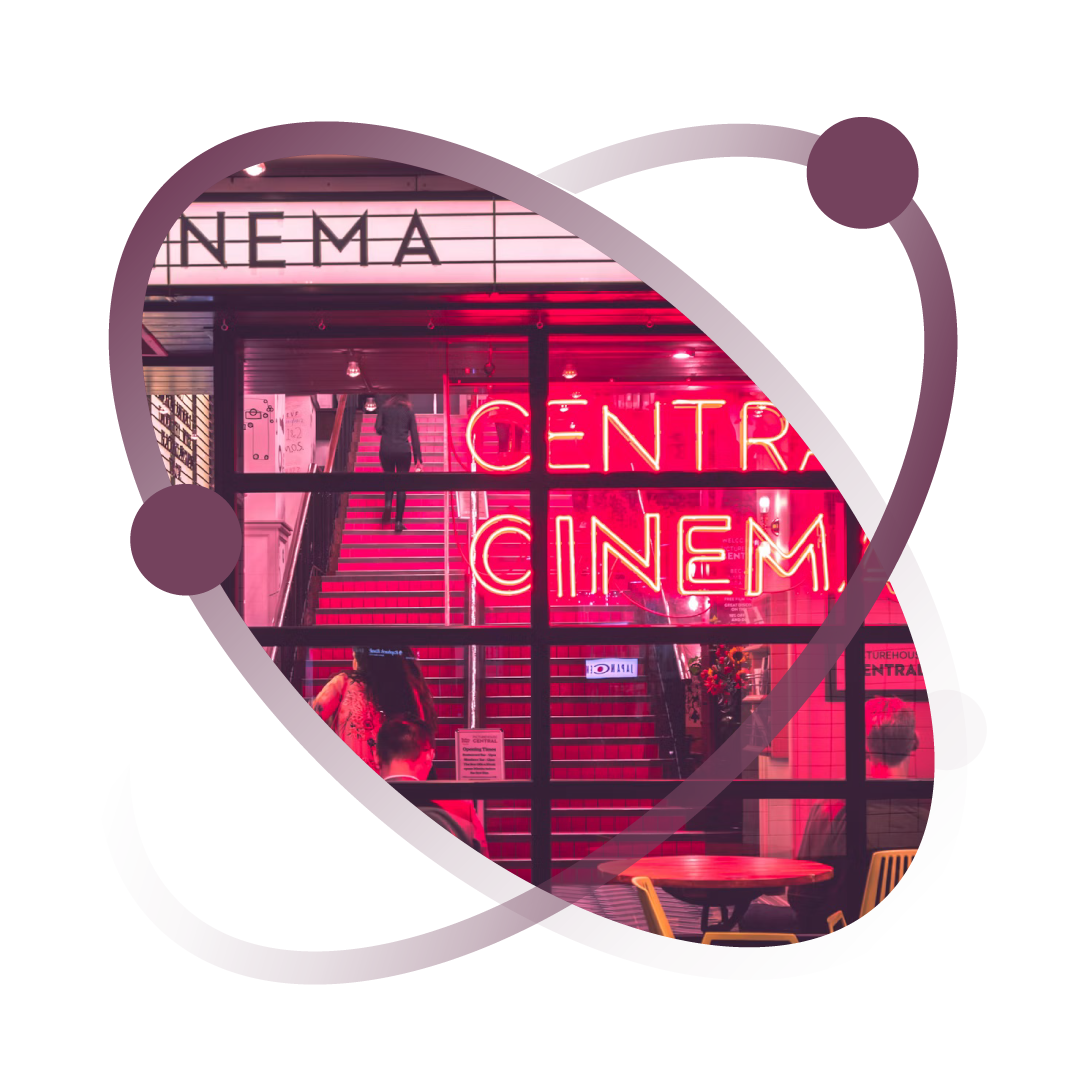

My favourite thing to do in an evening — or any time — is to go to the cinema with a large glass of white wine. My happy place is there: sitting in the dark, with no one talking to me, or asking me to bring them a snack, or do anything for them at all for 90 blissful minutes. I love it so much that it doesn’t really matter if the film is good or not, though obviously it’s a bonus if it is good.
My two sons — 14 and nine — haven’t always shared my love of going to films sadly. The main issue is having to sit still. Both are autistic and are ADHDers, so telling them to stay put for 90 minutes and not talk is far from their ideal way to spend time.
But in recent years a compromise has been made available: autism-friendly screenings have come along. I’ve cracked the nine year old this way — “you can move to your heart’s content! Yes really, no one will tell you off. And yes you can chat…. but ideally not to me as I want to concentrate”.
The 14 year old isn’t so sure, but I hope one day I will win him round. Perhaps I’ll present him with the manifesto below on why autism-friendly screenings are A Very Good Thing.
You are allowed to move
Whoever came up with the idea that you should sit still for 90 minutes plus ads was a neurotypical (someone who is not autistic or an ADHDer). Many neurodivergent people will find the ability to get up, fidget, or use a slightly noisy clicky fidget, or have a quick chat as a way to regulate their sensory or focus system. This movement and brain break often means they can get back to the task on hand, which is watching the film. Without it their whole energy can be taken up trying to be unnaturally still or under-stimulated, which makes it impossible to follow what’s happening.
I remember the look of joy when I first took my now nine year old to a relaxed screening and I explained he was allowed to move as much as he liked. He spent the first hour of the film gleefully getting up and moving to different seats. This movement meant he could then sit next to me the second half.
The volume is turned down
I saw a film recently (Stimming Pool, made by a group of neurodivergent film makers). It aimed to portray what a visit to the pub felt like for autistic people, and the film turned up the volume so it was uncomfortably high for everyone. It very effectively conveyed what the impact is of having to deal with a more chaotic and intense sensory environment: it basically stresses you right out. So turning down the volume can be a kindness and means my children (and me) are less likely to jump out of our skins when something dramatic happens. That said, some autistic people love the volume up loud, which just goes to show you there is no one size fits all solution for a large, diverse group of people with the same brain type.
A place to mask less
Relaxed screenings are a place where autistic and ADHD people can be more themselves, where they mask less and this is so valuable. Usually our family has to fit in with the non autistic world, so a place where we don’t have to follow or police neurotypical rules on a neurodivergent young person is a relief. Knock yourself out kid: seat hop to your heart’s content!
That means not only can my kids relax, but I can too. Having children who can’t as easily fit into society’s norms means you have a choice. Either you enforce rules that don’t work for your child (bowing to the expectations of people you don’t know) or you try to ignore it all and do what’s right for your family which can be hard if you are naturally people pleasing, which I am. So being in a situation where you don’t have to worry about any of this is obviously a relief.
Keep fine-tuning them
While I love autism friendly screenings I think we need to continue working out how they can work best. Currently lights are dimmed rather than turned off. But I’m not too sure why this is because most autistic people I know rush from school or work and head for a dark room to try and regulate themselves for as long as they can get away with.
So let’s celebrate a great initiative — making cinema accessible to everyone — and continue to fine tune it with neurodivergent people guiding what they want from their relaxed screenings.
As for my family, I just want my two to be alive to the idea that the cinema can be a refuge from a world that is hostile sensorily and which doesn’t always understand you. In a busy, noisy and demanding world, the cinema has become somewhere to go to counter all of that.
A bonus if you are autistic is that it’s an activity you can do where no one is trying to involve you in annoying unstructured chit chat — an angle I use to persuade my eldest, who hates chit chat as much as I do.
Jessie Hewitson is the author of Autism: How to Raise a Happy Autistic Child (Orion Spring).